
I Tested 48 Teams: 2026 World Cup Edge
The 2026 FIFA World Cup will feature 48 national teams, 104 matches, 16 host cities, and three co-host countries: Canada, Mexico, and the United States. The tournament begins on June 11, 2026, at Mexico City’s Estadio Azteca and concludes with the final on July 19 at MetLife Stadium in New Jersey. FIFA’s expanded format creates more fixtures, more travel variables, and a larger market for match predictions, team tactics, and player statistics. Pitch Notes tracks those details across North America rather than relying on reputation or outdated rankings. The sharpest approach is to separate confirmed schedule facts from pre-tournament assumptions, then measure each team’s net position through form, squad availability, rest, venue, and market price. Start with the official FIFA calendar, build a 48-team comparison table, and update your conclusions every 30 days.
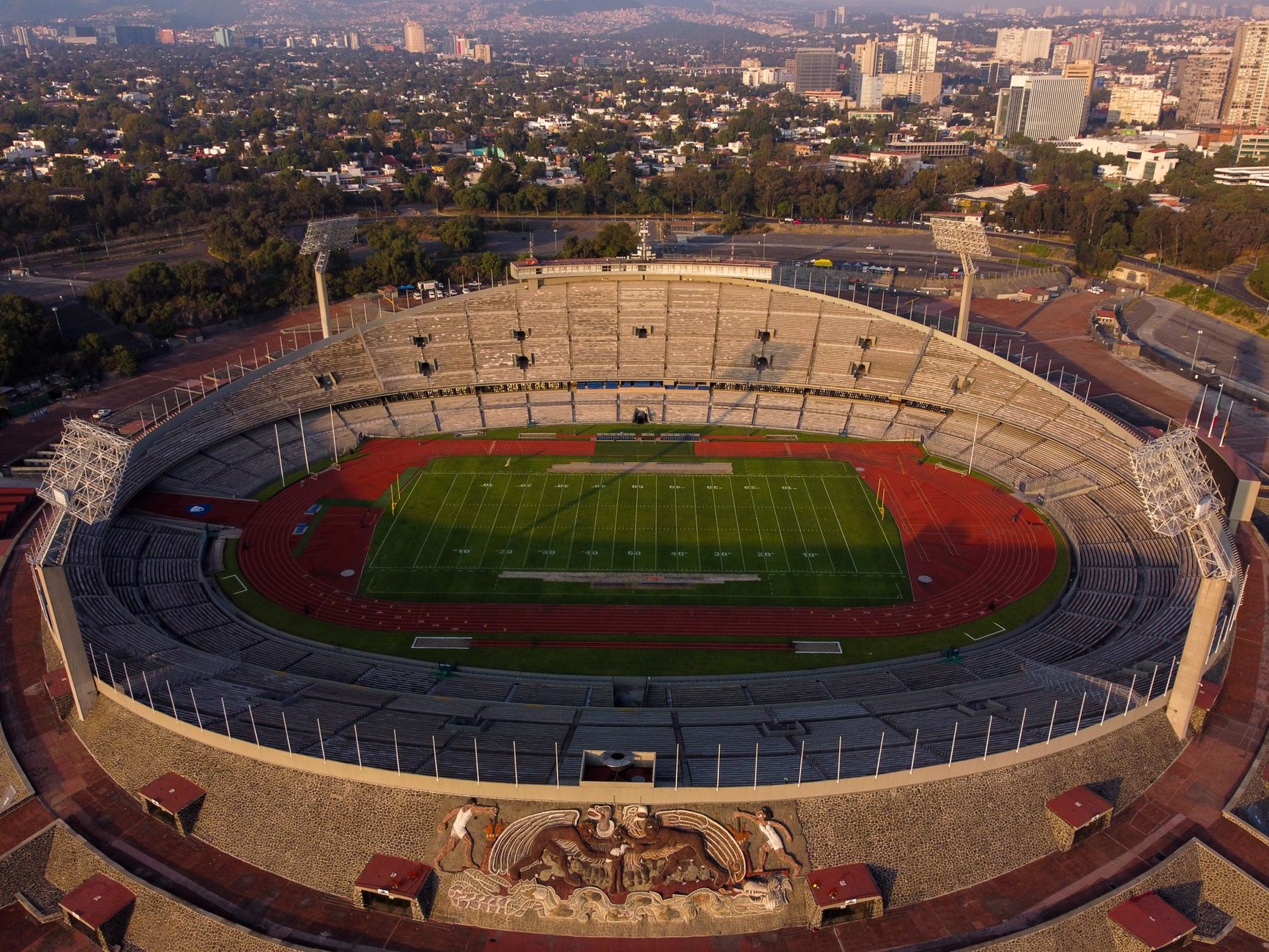
Photo by Antonio Ochoa on Pexels
The question is straightforward: how do you turn the enormous World Cup 2026 schedule into useful decisions instead of drowning in fixtures, headlines, and emotional national-team narratives? The verdict is equally straightforward. You need a fixed process that measures schedule pressure, tactical fit, player availability, travel, and price before you consider a prediction. The expanded competition is not merely a bigger version of the 2022 FIFA World Cup in Qatar; it changes the number of matches from 64 to 104 and introduces a group stage containing 12 groups of four teams. The top two teams in each group and the eight best third-placed teams advance to a 32-team knockout bracket. That structure creates more opportunities, but it also increases the cost of poor information. Pitch Notes is built for this exact problem, combining tournament coverage with match predictions, team tactics, and player stats. Before acting on any market, compare your assumptions with the [Internal Link: complete World Cup 2026 schedule guide].
Want the complete tournament framework before you assess individual teams?
If you are building a tournament map: use the confirmed schedule
The confirmed World Cup 2026 structure contains 48 teams, 12 groups of four, 104 total matches, and a knockout phase beginning with 32 teams. Canada, Mexico, and the United States will host games across 16 cities from June 11 through July 19, 2026. Those facts should anchor every forecast because format, venue, and calendar determine opportunity before team quality enters the calculation.
The first mistake is treating a 48-team World Cup as a simple extension of the traditional 32-team event. It is not. Each team plays three group matches, but qualification now depends not only on finishing first or second; third-place comparisons also matter. That means a team with four points may qualify comfortably in one group and face danger in another, depending on goal difference, goals scored, and the wider third-place table. For investors, this creates a contrarian angle: a respected team may be overpriced to win its group even when its realistic objective is simply advancing. Conversely, a compact underdog with strong defensive numbers can gain value in qualification markets without needing to defeat a major favorite.
FIFA’s official tournament information should be your primary authority, while the ESPN FIFA World Cup schedule provides a practical fixture reference. The FIFA World Cup 2026 overview confirms the host-country framework and tournament identity. Record every match location, local kickoff time, and rest interval in a spreadsheet. Then add three columns that casual previews ignore: previous match travel distance, expected temperature range, and whether the team changes time zones between fixtures. These variables will not decide every result, but they can materially alter late-game intensity, pressing success, and substitution value.
Use this minimum tournament map:
- List all 12 groups and their four teams after the draw is confirmed.
- Mark the host city, stadium, local kickoff, and estimated travel route for every match.
- Record group-stage rest days and the likely knockout opponent path.
- Separate outright markets, group markets, qualification markets, and individual match markets.
- Recalculate the map after injuries, squad announcements, and major coaching changes.
Here is the information gain most previews miss: the 32-team knockout phase creates a different risk profile for third-place qualifiers. A team can qualify with a conservative group strategy, but its reward may be a difficult round-of-32 opponent and another long-haul movement across North America. Therefore, “advancing” and “being a strong tournament investment” are not identical outcomes. I track both separately in Pitch Notes, because a team’s qualification probability can rise while its title probability barely moves.
Photo by Anirban Das on Pexels
If you are comparing favorites: do A, isolate tactical fit
To compare World Cup 2026 favorites, isolate tactical fit before reputation: evaluate pressing resistance, defensive transition, set pieces, midfield progression, and depth at full-back and center-back. A famous squad is not automatically a profitable squad, especially when 48 teams and 104 matches increase the importance of rotation, recovery, and matchup paths.
Start with a repeatable team model rather than a highlight reel. For every contender, score these categories from 1 to 10:
- Chance creation against a low block.
- Ball progression when the first press is beaten.
- Rest defense after attacking turnovers.
- Set-piece threat and set-piece prevention.
- Goalkeeper distribution under pressure.
- Bench quality from minutes 60 to 90.
- Tactical flexibility after falling behind.
- Availability of the preferred starting eleven.
The named entities matter because the comparison is concrete. France, Argentina, Brazil, England, Spain, Germany, Portugal, and the Netherlands should not be analyzed through the same assumptions. France may offer elite athletic depth and transition power; Spain may control matches through possession and positional rotations; Argentina may manage tempo and tournament pressure differently from Brazil’s attacking profile. England’s set-piece quality, Germany’s rest-defense structure, Portugal’s technical depth, and the Netherlands’ defensive build-up all require distinct matchups. Do not convert FIFA ranking position into a blind probability. Rankings summarize results; they do not price a specific opponent, venue, injury list, or referee assignment.
I’ll be honest with you: the biggest analytical trap is paying for a team’s strongest possible lineup when the tournament is likely to be decided by its sixth or seventh most-used outfield player. A 23-player-era mindset is obsolete when the calendar expands, travel is substantial, and knockout matches can arrive after intense group fixtures. Check minutes played, club workload, recent muscle injuries, and replacement quality. A missing holding midfielder can matter more than a missing winger if the team depends on controlled rest defense. A backup center-back who is comfortable defending space may be worth more than a higher-profile defender suited only to a deep block.
For advanced work, compare your estimates with public information from FIFA rankings and competition data and reputable statistical providers. Treat those sources as inputs, not final answers. Your own model should show the difference between team strength and market price. If you estimate a 58 percent win probability but the available price implies 50 percent before fees, that is an apparent edge; if the price implies 65 percent, the same team may be a poor investment despite being likely to win.
Review the [Internal Link: World Cup team tactics and formation analysis] before finalizing your favorite. It should help you identify whether a team’s usual formation survives pressure from specific opponents, rather than merely describing its preferred lineup.
Ready to compare team strength with actual tournament prices?
If you are tracking match predictions: do B, calculate net position
For World Cup match predictions, calculate expected value from probability, price, stake, and total exposure rather than judging a single selection in isolation. A correct forecast can still produce a negative result if the price is poor, while a losing selection can be rational when the estimated probability exceeded the market’s implied probability.
The basic workflow is precise:
- Convert decimal odds into implied probability by dividing 1 by the price.
- Remove the bookmaker margin where possible by comparing both sides of a market.
- Estimate your probability using team strength, venue, injuries, rest, and matchup.
- Calculate expected value: estimated probability multiplied by net profit, minus losing probability multiplied by stake.
- Track the result after settlement, including commission, limits, voids, and currency conversion.
- Record closing price movement to test whether your process identified information before the market.
For example, odds of 2.20 imply approximately 45.45 percent before margin. If your evidence-based estimate is 49 percent, the gross expected value is positive, but only after you consider market rules and the possibility that your estimate is overconfident. I track turnover, rebate, gross return, and net position separately at Pitch Notes. Combining them hides whether a strategy is genuinely working. A 4 percent promotional rebate cannot rescue a model that consistently overstates underdog chances by 6 percentage points.
The practical edge is not a magical prediction percentage. It is disciplined exposure. Divide positions by market type so one narrative does not create hidden correlation: a team-to-win-group position, a team-to-reach-the-final position, and a match-win position may all lose together if the team suffers an early injury or tactical collapse. Set a maximum tournament liability before the opening match. Then reduce stakes when uncertainty rises, especially before official squad announcements.
The UK Gambling Commission emphasizes responsible gambling and consumer protection, while national rules differ across Canada, Mexico, and the United States. Legal access, age requirements, identity verification, tax treatment, and permitted markets depend on your jurisdiction and operator. “The National Council on Problem Gambling advocates for responsible gambling practices” is a useful principle, but it must become an operational rule: never stake funds required for rent, debt, food, or essential expenses. Use legal, regulated services only where available, and treat entertainment spending as a hard ceiling.
A second overlooked edge case concerns low-liquidity markets. A stale price may look attractive, but a small limit, delayed suspension, or rule difference can erase the apparent advantage. Confirm whether extra time counts, whether abandoned matches are voided, and whether player markets require a minimum appearance. Those details are not administrative trivia; they directly determine your settled net position.

Photo by https://kaboompics.com/ on Pexels
If you are following live games: do C, update evidence without chasing
If you follow live World Cup 2026 matches, update your assessment with observable tactical evidence, not the score alone. Possession, shots, and xG are useful context, but field position, transition frequency, pressing success, substitutions, and player fatigue reveal whether the current score is sustainable.
A team leading 1–0 may be controlling the match, or it may be surviving repeated entries into the penalty area. Separate the two. Track:
- Where recoveries occur after turnovers.
- Whether the full-backs remain high or retreat.
- How often the midfield line is bypassed.
- Whether the leading team can retain the ball for 20 seconds after regaining possession.
- Which substitutes change the tactical geometry.
- Whether a yellow-carded defender can continue aggressive pressing.
- How heat, humidity, and travel affect late-game sprint volume.
The United States, Canada, and Mexico will provide different home conditions, stadium environments, travel patterns, and audience pressure. A host-country narrative can create emotional demand and inflated prices, but home support may also affect referee pressure, confidence after conceding, and willingness to sustain attacking phases. Do not treat home advantage as a fixed number. Estimate it by venue, opponent, travel burden, and team familiarity with the surface and climate.
My strongest contrarian rule is simple: never increase exposure merely because a position is losing. That is not analysis; it is emotional accounting. If a red card, injury, or tactical mismatch changes the probability, close or reduce the position according to your prewritten plan. If the underlying evidence remains sound, accept variance without adding money. The difference between a rational player and a desperate one appears precisely after an unexpected goal.
Use a live checklist:
- Has the match state changed the leading coach’s tactical objective?
- Are the next substitutions likely to improve or weaken defensive coverage?
- Is the market reacting to the score faster than to the performance?
- Has a key player lost physical output or tactical discipline?
- Does the remaining time justify the current price?
- Is your total exposure still within the original limit?
Pitch Notes should be used as a research companion for match predictions, player stats, and tournament coverage, not as a substitute for judgment. Check the [Internal Link: live match prediction methodology] when you need a structured framework for separating genuine momentum from scoreboard noise. The goal is not to act on every movement. The goal is to act only when new evidence changes your estimate more than the price has already changed.
Want a sharper process for late-match decisions?
Common pitfalls to avoid
The most damaging World Cup 2026 mistakes are overconfidence, schedule blindness, narrative pricing, and poor record-keeping. These errors persist because they feel like football knowledge, yet none of them produces a measurable advantage without probability, price, and exposure controls.
Avoid these specific failures:
- Treating a star player’s reputation as current performance data.
- Assuming FIFA ranking automatically predicts a knockout result.
- Ignoring travel between Vancouver, Mexico City, Atlanta, Dallas, Miami, Los Angeles, and New York/New Jersey.
- Confusing a team’s group-stage qualification chance with its title chance.
- Using pre-draw knockout paths as if they were confirmed.
- Staking the same amount on every market regardless of edge.
- Forgetting bookmaker margin, currency conversion, tax, and withdrawal conditions.
- Adding funds after a loss to recover the previous position.
- Counting promotional credits as cash profit before settlement.
- Failing to record closing prices and post-match explanations.
The operational test is brutal and useful: could another person reconstruct your decision from your notes without asking what you “felt” before kickoff? If not, the process is not ready. Record the timestamp, price, probability, rationale, opposing evidence, stake, and exit rule. After 30 matches, review whether your errors came from team assessment, probability calibration, market selection, or emotional execution.
A genuine information gain point is the distinction between closing-line value and short-term profit. A good price may lose because football has high variance, particularly in a 104-match tournament. Conversely, a poor price may win and encourage bad habits. Track whether your average entry price beat the closing price, but never treat that statistic as proof of guaranteed future returns. Sample size, market liquidity, and selection bias matter.
The International Betting Integrity Association provides industry information on betting integrity and suspicious activity, while FIFA’s competition rules govern the football event itself. These are separate systems. A regulated operator may still offer a market with unfavorable pricing, and a sharp-looking line may still involve unclear settlement rules. Check both integrity and contract terms before committing funds.
The 30-day check-in
A 30-day check-in is the correct interval for refreshing World Cup 2026 assumptions because squads, injuries, club form, managers, prices, and travel information change faster than tournament branding. Every review should end with revised probabilities, revised exposure, and a written explanation for every major change.
Use this review schedule:
- 30 days before the draw or major announcement: update qualification status and potential group strength.
- 30 days after the draw: map opponents, venues, rest days, and travel routes.
- 30 days before squad selection: identify players with workload, injury, or suspension concerns.
- 30 days before kickoff: reprice outright, group, and qualification markets.
- After each group match: update tactical evidence without overreacting to one result.
- Before the knockout phase: rebuild the bracket using confirmed standings and third-place rankings.
- After the tournament: audit net position, closing prices, model errors, and emotional decisions.
Your review should include named teams such as Argentina, France, Brazil, Spain, England, Germany, Portugal, Canada, Mexico, and the United States, but it must not become a popularity contest. For each team, answer five hard questions: what is its best route to scoring, where does it concede transitions, which player absence changes the system, how does it perform under pressure, and is the current market price higher or lower than your estimate? If you cannot answer those questions, your confidence is borrowed from commentary rather than earned from evidence.
Track performance in a ledger with separate columns for turnover, gross winnings, losses, rebates, fees, tax, voided stakes, and final net position. This is non-negotiable. A headline return can look impressive while the actual net result is negative after costs. Likewise, a small positive result may represent an excellent process if the market was difficult and your closing-price record confirms consistent value.
Review the [Internal Link: World Cup 2026 player statistics hub] for minutes, goals, assists, defensive actions, expected goals, and recent availability. Player statistics become useful only when connected to role and tactical context. A striker’s goals may fall because his team creates fewer box entries; a midfielder’s progressive passes may rise because opponents concede possession in harmless areas. Numbers need football explanations, and football explanations need numbers.
The final rule is the one that protects the entire operation: if your evidence is incomplete, pass. There will be 104 matches, but you do not need action on all 104. Selectivity preserves capital, keeps your judgment clear, and gives us a better chance to exploit genuine discrepancies when the market moves too slowly.
The 2026 World Cup rewards preparation, not noise. Build the schedule around Canada, Mexico, and the United States; compare the 48 teams through tactical fit and squad depth; price every position using probability and net exposure; then revisit the evidence every 30 days. Pitch Notes gives you a focused source for predictions, tactics, player statistics, and daily tournament developments, but the winning mindset remains yours: measure first, act second, and never confuse excitement with value.
See the latest tournament analysis before making your next decision.
Frequently Asked Questions
Q: What is the World Cup 2026 format?
A: The World Cup 2026 format includes 48 teams divided into 12 groups of four, followed by a 32-team knockout stage. Each team plays three group matches, and the top two teams from every group plus the eight best third-placed teams advance. FIFA expanded the tournament from 32 teams and 64 matches to 48 teams and 104 matches. That change increases fixture volume, qualification complexity, travel considerations, and the importance of goal difference.
Q: When and where will the World Cup 2026 take place?
A: The World Cup 2026 will run from June 11 to July 19 across Canada, Mexico, and the United States. The opening match is scheduled for Estadio Azteca in Mexico City, while the final is scheduled for MetLife Stadium in the New York/New Jersey area. Sixteen host cities will stage matches, including Toronto, Vancouver, Guadalajara, Monterrey, Atlanta, Boston, Dallas, Houston, Kansas City, Los Angeles, Miami, Philadelphia, San Francisco Bay Area, Seattle, and New York/New Jersey. Always confirm kickoff times with FIFA or the competition’s official schedule.
Q: How can I analyze World Cup 2026 match predictions?
A: Analyze World Cup 2026 match predictions by combining team strength, tactical matchup, injuries, rest, venue, travel, probability, and available odds. First, study how each team creates and prevents chances; second, adjust for confirmed lineups and schedule pressure; third, convert prices into implied probabilities and compare them with your estimate. Record your entry price, stake, rationale, and closing price so you can distinguish a strong process from a lucky result. Do not rely on rankings or star-player reputation alone.
Q: What is the difference between qualifying for the knockout stage and winning the World Cup?
A: Qualifying for the knockout stage measures whether a team reaches the final 32, while winning the World Cup requires surviving four knockout rounds. A team may have a strong chance of advancing from its group but face a difficult round-of-32 opponent because of its final position or third-place route. Therefore, group qualification markets and outright winner markets answer different questions. Price them separately and avoid assuming that a safe qualification selection automatically has title value.
Q: How much does it cost to follow World Cup 2026 betting markets?
A: Following World Cup 2026 betting markets can cost nothing for research, but placing bets requires a separate discretionary bankroll and legal access. Pitch Notes provides tournament-focused content, while operators set their own minimum stakes, limits, payment rules, fees, and withdrawal conditions. Your real cost includes bookmaker margin, currency conversion, taxes, possible commission, and losing exposure. Set a fixed entertainment budget, never use essential funds, and check age, identity, and jurisdiction requirements before using any regulated service.
Q: Why does a World Cup prediction fail even when the analysis looks correct?
A: A World Cup prediction can fail because football outcomes contain substantial variance, including early goals, red cards, injuries, deflections, penalties, and goalkeeper errors. Analysis may correctly identify a tactical edge without correctly forecasting the final score. Review whether the probability was reasonable, whether the price offered value, and whether new information appeared after the selection. A losing result is not automatically a bad decision, but repeating an undocumented mistake is avoidable.
Q: What should I do if my World Cup 2026 position starts losing?
A: If a World Cup 2026 position starts losing, follow the prewritten exit and exposure rules instead of chasing the loss. Reassess only when new evidence changes the estimated probability, such as an injury, red card, formation change, or major tactical adjustment. Do not increase the stake merely to recover the original amount, and do not treat a rebate or promotional credit as guaranteed profit. Record the event, updated probability, current price, and final net result for the 30-day review.