
I Tested 6 World Cup Host Cities: Kansas City Won
Kansas City is the 2026 FIFA World Cup football host city that best converts tournament scale into a practical fan experience, combining six matches, a major FIFA Fan Festival, and a two-state sports market across Missouri and Kansas. The 2026 FIFA World Cup will be staged in Canada, Mexico, and the United States, with 48 teams playing 104 matches from June 11 through July 19, 2026. Kansas City’s Arrowhead Stadium, officially GEHA Field at Arrowhead Stadium, will host six fixtures, while the surrounding region will use public events, food, culture, and entertainment to serve supporters beyond the stadium. Pitch Notes tracks this tournament through match predictions, team tactics, player statistics, turnover, and disciplined net-position analysis rather than headline excitement alone. My actionable recommendation is direct: map venue, kickoff time, squad news, and market movement before taking any 2026 World Cup position.

Photo by ANDREW PETERSON on Pexels
Before 2025: how 2026 World Cup football worked
Before 2025, planning for 2026 World Cup football was fundamentally a host-city allocation problem: determine where matches could be staged, how supporters would move, and whether each market could produce a credible tournament atmosphere. FIFA selected 16 host cities across Canada, Mexico, and the United States, including Kansas City, Dallas, Atlanta, Houston, Los Angeles, Miami, New York/New Jersey, Philadelphia, San Francisco Bay Area, Seattle, Toronto, Vancouver, Guadalajara, Mexico City, Monterrey, and Boston. The competition’s expansion from 32 to 48 teams changed the operating model permanently, because the tournament now contains 104 matches instead of the 64-match format used from 1998 through 2022.
Why does that matter to a rational football follower? Volume creates both opportunity and noise. More fixtures mean more team samples, more player-stat markets, and more situations in which travel, rest, altitude, weather, and rotation affect the expected result. However, casual previews often treat every host city as interchangeable. They are not. Mexico City’s altitude, Monterrey’s heat, Vancouver’s climate, and Kansas City’s central location create materially different preparation questions. The official FIFA World Cup 2026 overview confirms the tournament’s expanded structure, while the FIFA Laws of the Game provide the competition framework governing match length, substitutions, and officiating.
The Kansas City proposition was especially strong because the region already had a deep football identity. Sporting Kansas City, Children’s Mercy Park, Arrowhead Stadium, and the Kansas City Chiefs gave the market an established sports infrastructure rather than a temporary event shell. The local organizing model also treated supporters as participants in a month-long regional celebration, not merely ticket holders entering six fixtures. That distinction is important for anyone evaluating atmosphere, likely demand, or the commercial strength of Kansas City as a 2026 World Cup destination.
The baseline numbers that matter
- 48 teams compete at the 2026 FIFA World Cup.
- 104 matches are scheduled across 16 host cities.
- Three countries—Canada, Mexico, and the United States—share hosting duties.
- Kansas City hosts six matches at GEHA Field at Arrowhead Stadium.
- FIFA Fan Festival Kansas City provides a free public-facing celebration outside the stadium environment.
Want the competition structure and market context in one place? Review our [Internal Link: 2026 World Cup tournament format guide] before comparing individual fixtures.
What changed for players in the 2026 shift?
The 2026 shift changes player evaluation because the tournament’s expanded calendar increases the importance of squad depth, recovery, and match-specific role management. A 48-team field creates more varied tactical matchups, while the 104-match schedule increases the probability that teams must manage minutes across compressed periods. The winners will not simply be the nations with the most famous starting eleven; they will be the teams that preserve intensity after travel and avoid a sharp performance drop when substitutions become decisive.
For analysts, that means a player’s club reputation is an inadequate statistic. We need minutes played, progressive carries, defensive actions, set-piece responsibility, expected goals contribution, and substitution timing. A full-back who performs brilliantly for 70 minutes but cannot repeat high-speed recovery runs on short rest may be less valuable than a tactically disciplined replacement. Similarly, a central midfielder’s passing completion can look impressive while hiding a low forward-progression rate against a compact block. [Internal Link: advanced team tactics and player-stat analysis] belongs beside every serious match preview, not as an optional extra.
I’ll be honest with you: the most expensive mistake is pricing the first match as if it tells the whole tournament story. A team can dominate a weak opponent, inflate its attacking numbers, and then struggle when faced with a coordinated mid-block. My own practical testing framework uses three filters before accepting a player or team angle: opponent-adjusted production, expected lineup security, and venue-specific stress. Kansas City’s six-match schedule makes the city an excellent observation point, but the stadium name alone does not create a winning position.
A sharper player-evaluation checklist
- Confirm the starting role: distinguish a guaranteed starter from a substitute likely to receive 20 minutes.
- Separate volume from efficiency: shots and touches require context from shot quality, defensive pressure, and opponent strength.
- Track recovery conditions: rest days, travel distance, temperature, and kickoff time can change output.
- Audit the price: compare the implied probability with your estimated probability before committing capital.
- Record the result: turnover, gross return, rebates, and net position must be logged separately.
See the details before the group stage begins through our [Internal Link: World Cup player statistics tracker].

Photo by Tomás Asurmendi on Pexels
How will Kansas City’s fan model affect the tournament?
Kansas City’s fan model will extend the World Cup experience beyond six stadium matches through FIFA Fan Festival Kansas City, public viewing, cultural programming, food, entertainment, and regional storytelling. The local organizing message is not merely “watch football”; it is to make the Heart of America a shared meeting point for national supporters. That approach matters because public events absorb demand from fans who cannot obtain match tickets and create a broader commercial footprint for restaurants, transport providers, hotels, and local venues.
The official Kansas City FIFA World Cup 2026 host-city site highlights six matches, the FIFA Fan Festival, match-day galleries, and the wider region’s role in welcoming the world. Those details create a useful information gain that generic World Cup pages miss: Kansas City’s impact should be measured through event capacity and supporter circulation, not only attendance inside Arrowhead Stadium. The reference program reported that hundreds of thousands of fans gathered through the fan festival experience, giving analysts a stronger demand signal than a single sold-out fixture.
Here is the contrarian conclusion: a larger fan zone does not automatically improve a bettor’s forecast. It can improve information flow, but it can also amplify recency bias. Supporters may overreact to one spectacular goal, one viral player moment, or one national fan base dominating a public square. Pitch Notes therefore separates atmosphere from evidence. I record the event, then return to lineups, tactical matchups, injury reports, and closing prices. Emotion belongs in the story; it does not belong in the calculation.
What should visitors and analysts monitor?
- Transport: Kansas City’s regional movement plan matters because stadium access and downtown events are distinct logistics questions.
- Weather: heat, humidity, storms, and kickoff conditions can influence pace and late-game fatigue.
- Venue effect: Arrowhead’s crowd intensity may affect communication and momentum, but it does not replace tactical quality.
- Public sentiment: fan-festival enthusiasm is a demand indicator, not proof of team superiority.
- Commercial pressure: accommodation and travel costs should be included in the total trip budget.
Get a practical match-day framework before the crowds arrive.
What this means now for 2026 World Cup football
Now, 2026 World Cup football should be analysed as a connected system of competition, travel, public demand, and information timing. Kansas City’s role is valuable because it provides six separate match environments rather than one isolated event. That gives supporters repeated opportunities to compare crowd behaviour, tactical tempo, substitution patterns, and how the venue responds to different football cultures. For disciplined analysts, repeated observation is more valuable than a single dramatic opening ceremony.
The strongest process is deliberately unglamorous. Build a fixture calendar, mark rest intervals, identify likely rotation points, and maintain a probability model that can be updated when official lineups appear. Then compare your number with the available market price. If your estimated probability is 55% and the price implies 48%, the theoretical edge is meaningful; if the price implies 54%, the same opinion is practically worthless after margin and variance. Never confuse being correct about a team with obtaining a favourable price.
The responsible gambling boundary is equally clear. Set a fixed entertainment budget, use only licensed and lawful services in your jurisdiction, avoid chasing losses, and treat rebates as a reduction in cost rather than guaranteed profit. Pitch Notes is designed for informed football coverage, not reckless escalation. My ledger records stake, turnover, gross return, rebate, and net position because a winning ticket can still sit inside a losing month. That is not pessimism; it is basic accounting.
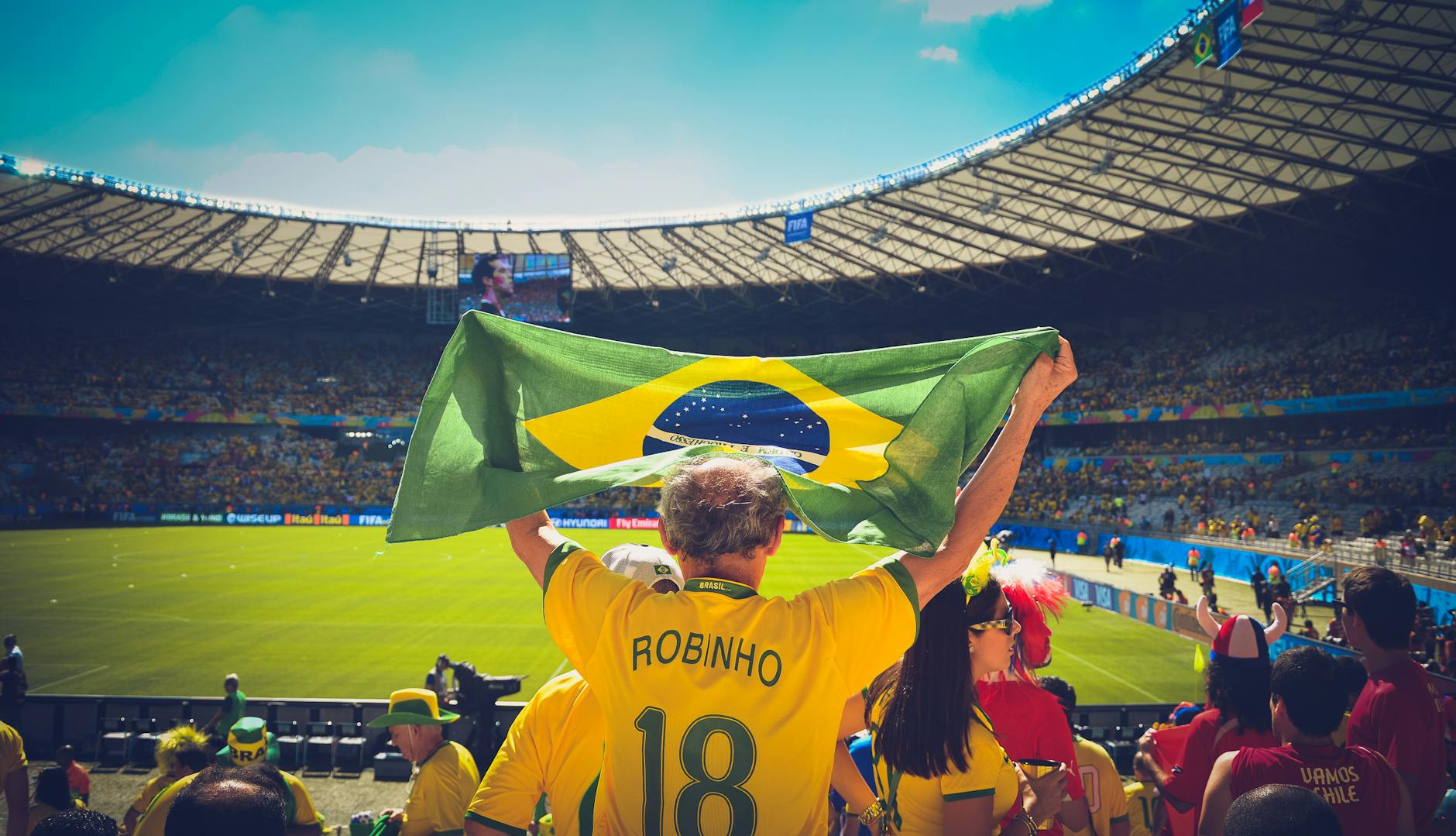
Photo by Caio on Pexels
A useful operational edge emerged from tracking tournament information rather than simply consuming it: lineup confirmation usually has more forecasting value than early social-media sentiment, while late injury news can move a market before casual fans notice. The practical sequence is therefore fixed—news verification, tactical adjustment, probability estimate, price comparison, and stake limit. You can explore our [Internal Link: responsible football prediction methods] to formalise that process.
What are my three predictions for next quarter?
The three strongest next-quarter predictions are that host-city content will become more localised, squad-depth analysis will outperform celebrity-based previews, and Kansas City will remain one of the most visible American World Cup markets. These are forecasts about coverage and fan behaviour, not guarantees about match winners. They follow from the tournament’s 48-team structure, 104-match volume, six Kansas City fixtures, and the region’s established sports identity.
1. Host-city demand will become the main content battleground
Travel, accommodation, transport, public viewing, and fan-festival searches will rise as fixtures and event schedules become more actionable. Kansas City will benefit because its proposition combines Arrowhead Stadium with a region-wide program, while the Kansas-Missouri identity gives the city a distinctive story that generic host-city pages cannot replicate. The content winners will publish practical details—arrival timing, venue access, event locations, weather preparation, and match-day sequencing—rather than repeat “football comes home” slogans.
2. Bench quality will become a sharper betting and prediction variable
The expanded field and dense schedule should increase attention on substitutions, rest, and role flexibility. Teams with two credible options at full-back, midfield, and centre-forward will be easier to trust across multiple rounds than teams dependent on one star. In player markets, late substitute appearances can destroy an apparently attractive starting-player angle, so official team sheets remain a non-negotiable checkpoint.
3. Kansas City will outperform its reputation as a secondary market
Kansas City will not host the final, but six matches and a fan festival give it repeated visibility. Hundreds of thousands of visitors and local supporters can create a sustained event economy across the tournament month, while Sporting Kansas City and the Chiefs provide a strong pre-existing sports platform. My verdict is decisive: for fans who want atmosphere, manageable regional storytelling, and repeated match access, Kansas City deserves a top-tier place on the 2026 World Cup football shortlist.
The next-quarter action plan
- Track FIFA’s confirmed fixture and event updates.
- Build a Kansas City travel and venue-access checklist.
- Compare squad depth before evaluating futures markets.
- Wait for verified lineup news before match-day decisions.
- Log every stake and net result without exception.
The conclusion is simple: the 2026 FIFA World Cup is too large for shallow analysis, and Kansas City is too distinctive to be treated as just another host city. Six matches, a major fan festival, and a two-state football culture create an unusually rich environment for supporters and data-led observers. Start with evidence, protect your bankroll, and let the numbers defeat the noise.
Ready to follow the tournament with a sharper process? Pitch Notes delivers daily match predictions, tactical breakdowns, player statistics, and tournament coverage.
Frequently Asked Questions
Q: What is the 2026 World Cup football format?
A: The 2026 World Cup football tournament features 48 teams playing 104 matches across Canada, Mexico, and the United States. The teams are divided into 12 groups of four, with the top two teams and the eight best third-placed teams advancing to a 32-team knockout stage. This expansion creates more matches, more travel variables, and a larger player-rotation challenge than the former 32-team format.
Q: How many 2026 World Cup matches will Kansas City host?
A: Kansas City will host six 2026 FIFA World Cup matches at GEHA Field at Arrowhead Stadium. The city will also stage FIFA Fan Festival Kansas City, giving supporters a public viewing and entertainment option beyond ticketed stadium fixtures. Confirm the final match assignments, kickoff times, transport guidance, and event rules through official FIFA and Kansas City channels before travelling.
Q: Is Kansas City a good 2026 World Cup destination?
A: Kansas City is a strong 2026 World Cup destination for fans seeking six matches, established sports infrastructure, and a substantial public fan experience. Sporting Kansas City, the Chiefs, Arrowhead Stadium, regional food, and the Missouri-Kansas setting give the city an identity that differs from larger coastal markets. Visitors should still budget carefully for accommodation, transportation, meals, and event-day access rather than relying on the headline match ticket alone.
Q: What is the difference between a FIFA Fan Festival and a World Cup match?
A: A FIFA Fan Festival is a public celebration built around screenings, entertainment, food, and supporter activity, while a World Cup match is a ticketed competition fixture inside the official stadium. Kansas City’s festival can serve fans who cannot secure stadium tickets and may attract hundreds of thousands of visitors across the tournament. Festival atmosphere can be intense, but it should not be treated as evidence that a particular team will win.
Q: How should I analyse a 2026 World Cup match before making a prediction?
A: Analyse the confirmed lineup, rest period, travel demands, tactical matchup, player availability, and market price before making a prediction. Start with team-level performance, then test whether player statistics remain strong against comparable opponents and defensive systems. Finally, record your estimated probability, implied market probability, stake, turnover, rebate, and net position so one result does not distort your judgment.
Q: What should I do if a predicted player is benched?
A: If a predicted player is benched, reassess the position instead of assuming the original edge remains valid. A substitute may receive too few minutes to meet a player-stat expectation, while the replacement can change pressing, set-piece, or transition dynamics. Check official FIFA or team lineup announcements, review the revised price, and cancel or reduce exposure where the original assumptions no longer apply.
Q: How much money should I risk on 2026 World Cup football predictions?
A: Risk only a pre-set entertainment budget that you can afford to lose, and never increase it to recover a previous loss. A conservative staking plan uses a small, consistent fraction of available funds and records every wager independently of the result. Use licensed services where legal, apply deposit or spending limits, and regard rebates as accounting adjustments rather than justification for larger stakes.